Case Study
Sam's Club (Walmart)

IBG Financial Forecasting & Planning Tool

Transforming financial planning through AI-powered intelligence and automation

+30% Forecast Accuracy
60% Faster Planning
1,800+ hrs/year Saved

At a Glance

RoleProduct Manager II Team28 cross-functional Timeline12 months (2024–2025) PlatformEnterprise Web App
Problem

Finance teams at Sam's Club spent 1,800+ hours a year manually pulling data from 12+ siloed systems — and executive decisions still lagged 2–3 weeks behind reality.

Why It Mattered

Strategic decisions on stale data meant missed opportunities and reactive planning at scale — across a $1B+ annual planning footprint and 600+ club locations.

What Shipped

A unified AI-powered financial planning platform: real-time P&L visibility, ML forecasting, and scenario modeling — all in one place, built in 12 months.

Impact

100% org adoption in 6 months. +30% forecast accuracy. 1,800+ hours saved annually. $2.4M+ in value delivered. Platform now influences $1B+ in planning decisions.

The Stakes

Critical business decisions delayed by weeks due to manual processes and data fragmentation
The Problem - Manual processes and fragmented data
1,800+
Hours wasted annually in Excel and fragmented BI tools
12+
Different systems with siloed, inconsistent data
2–3 wks
Lag before financial data reached executive decision-makers

Business Challenges

Strategic Paralysis

Executive decision-making delayed 2–3 weeks waiting for financial consolidation, causing missed market opportunities and reactive business moves.

Data Fragmentation Risk

Critical P&L data scattered across 12+ systems created version control issues, conflicting reports, and eroded stakeholder confidence in financial insights.

Competitive Disadvantage

Outdated reporting cycles meant leadership made strategic decisions on 2-week old data while competitors operated with real-time market intelligence.

Forecast Unreliability

Manual forecasting methods led to 30%+ forecast variance, undermining budget planning, resource allocation, and investor confidence.
Strategic Response

Three pillars. Two flagship features. One platform.

Data Unification

Consolidated 12+ systems into a single source of truth. Real-time pipeline with automated validation eliminated 95% of data errors.

AI-Driven Automation

ML forecasting delivering +30% accuracy and 1,800+ hours/year saved. Intelligent anomaly detection reduced manual review by 80%.

Strategic Velocity

Decision time cut from weeks to days. What-if scenario modeling and real-time KPI dashboards enabled proactive strategy at the executive level.

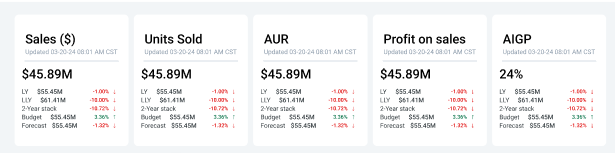
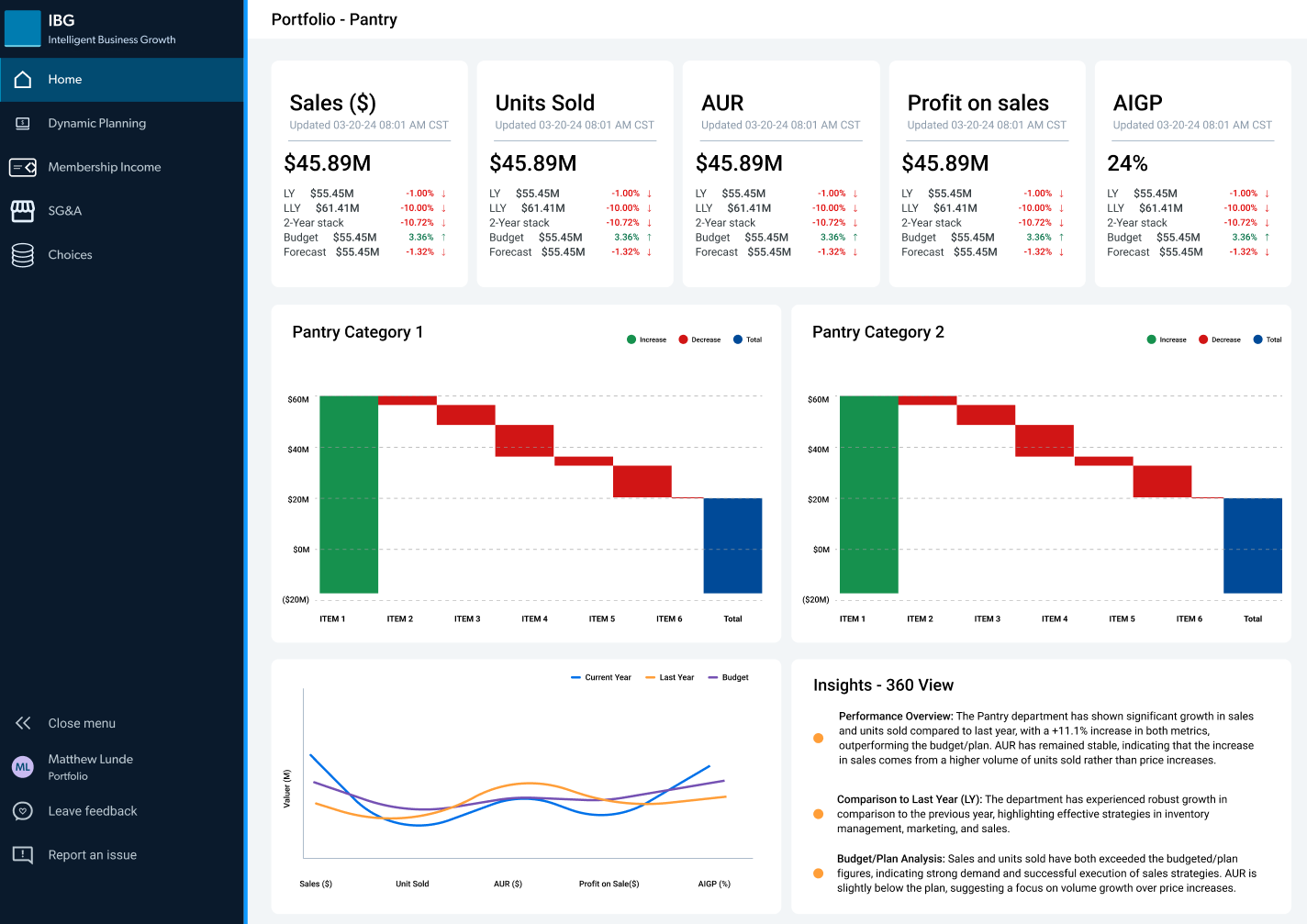
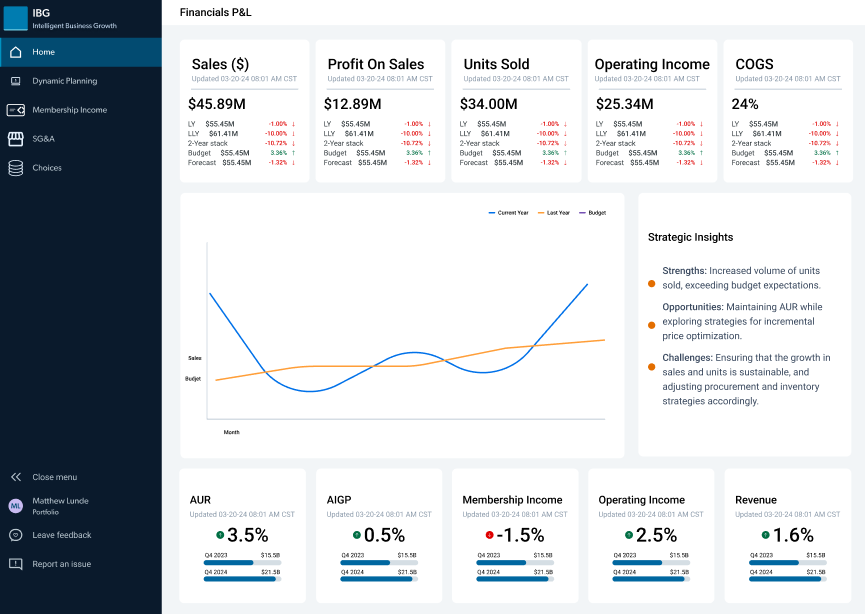
Unified P&L Dashboard

Unified P&L Dashboard

12+ data sources in one real-time view. Prioritized #1 for immediate impact on decision velocity — the first thing executives open every morning.

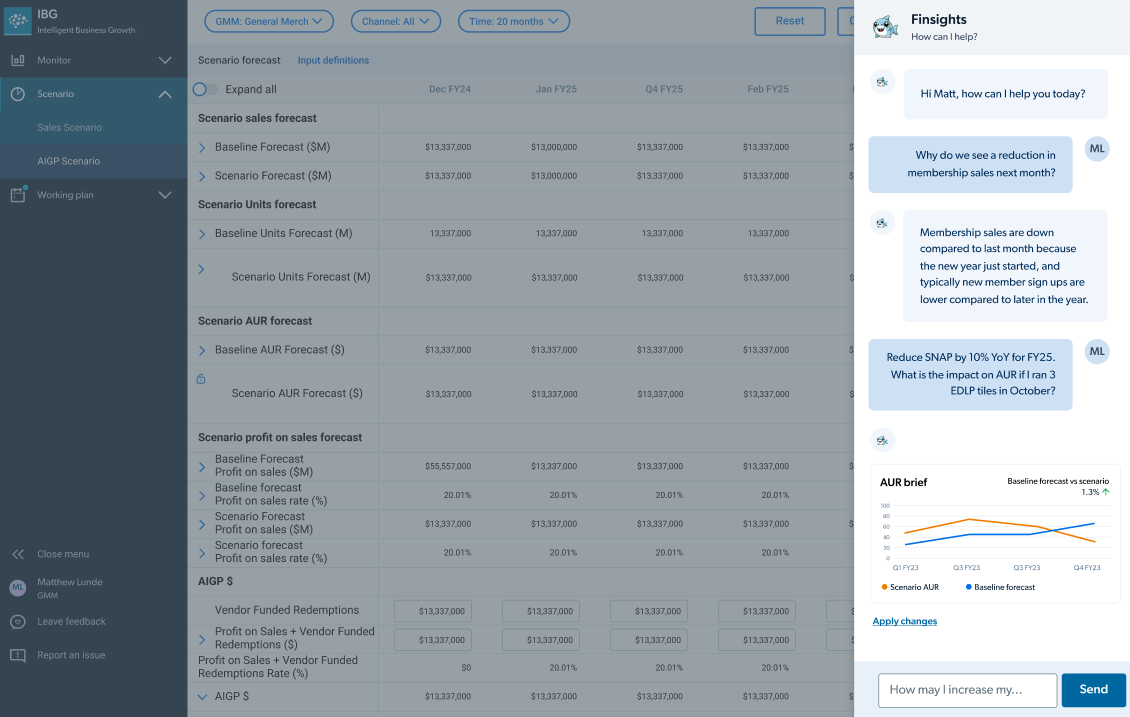
AI-Powered Forecasting

AI-Powered Forecasting

ML models cut forecast variance 30% and saved 800+ hours/year. The feature that turned skeptics into believers — and opened the door to 100% adoption.

What It Took

The real work — obstacles, tradeoffs, and the pivot that changed everything

Technical Feasibility Risk

Navigated a build vs. buy decision for 12+ system integrations. Built the business case for a custom platform against an $800K/year vendor solution — and won on 3-year TCO.

Adoption Resistance

Overcame "Excel is fine" inertia through a phased rollout, a power-user champion program, and quick wins visible in the first 30 days. Users became advocates.

AI Model Trust

Stakeholder confidence in ML forecasts didn't come for free. Built it through transparent model validation, A/B testing against manual forecasts, and explainable AI features.

Executive Buy-In

Secured $1.2M investment through ROI modeling and roadmap alignment with CFO, CIO, and SVP Merchandising. Monthly steering committee kept the path clear.

The Shift That Changed Everything

Positioning pivot: from "replacement tool" to "intelligence augmentation"

We were six months in and adoption was plateauing. The product was strong — the message wasn't. Finance teams heard "new tool" and heard "job threat." When we reframed the platform as something that made them more strategic — not obsolete — everything shifted. Skeptical users became champions. The remaining rollout accelerated by 3 months. The product didn't change. The story did.

The Results

Quantifiable outcomes across efficiency, accuracy, adoption, and strategic impact

+30%
Forecast accuracy improvement
60%
Faster planning cycles
1,800+
Hours saved per year
100%
Org adoption in 6 months

Adoption & Engagement

Active users 139+
Merchandising org adoption 100%
Executive P&L visibility Real-time

Strategic Impact

Annual value created $2.4M+
Planning decisions influenced $1B+
Decision speed advantage 2 weeks faster
Impact & Results

What I Learned

Four lessons I'll carry into every enterprise product I build

💡

Positioning is product work

Framing our platform as "intelligence augmentation" vs. "workforce replacement" unlocked 100% adoption. How you name and position a product shapes how people use it — and whether they use it at all.

🤖

Build vs. buy needs a real business case

We beat an $800K/year vendor on 3-year TCO, differentiation, and extensibility. PMs have to defend architecture with numbers, not just product instinct — and be willing to be wrong.

Ruthless prioritization beats feature completeness

RICE scoring across 40+ requests. Top 3 features drove 85% of user value. Shipping the right things fast beats shipping everything slow — especially when adoption is the metric that matters.

🎯

Executive sponsorship isn't optional at enterprise scale

CFO, CIO, SVP Merchandising — secured before a line of code was written. Monthly steering committee unblocked integrations that would've taken quarters otherwise. Sell up early or get stuck.

Interested in Learning More?

I'd love to discuss this project in detail or explore how we can work together on your next product challenge.

AI & ML Products
Enterprise SaaS
Product Strategy